


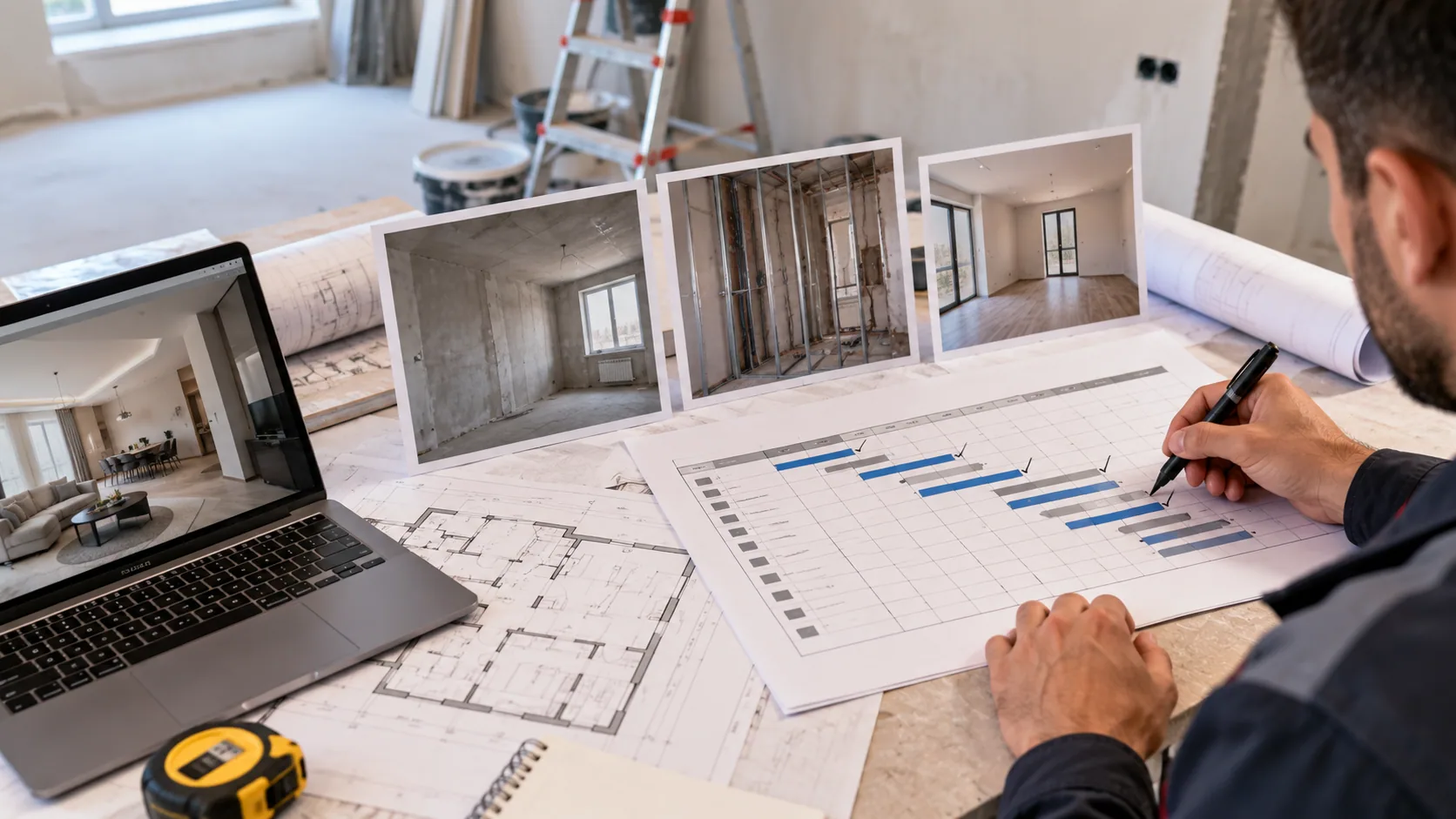
Typical starting ranges are 2–5 weeks for cosmetic renovation, 2–4 months for major renovation and 3–5 months for turnkey renovation. These are guides, not promises for every apartment.
What affects duration
Area and condition, demolition, drying times, the quantity of electrical and plumbing work, design complexity, material availability, access rules and client changes all affect the schedule. An apartment with hidden substrate defects cannot be timed accurately from photographs alone.
A realistic sequence
The normal sequence is assessment and design; estimate and procurement planning; demolition; building services; partitions and substrates; waterproofing; tiling and finishes; flooring and fixtures; checks and handover. Some operations can overlap, while others must wait for inspection or curing.
Protecting the schedule
Approve technical decisions before closing finishes, order long-lead materials early, define how changes are authorized and use stage milestones rather than one final date alone. The project manager should report any risk as soon as it appears and explain the revised effect.
Why speed can be misleading
An unrealistically short promise may ignore preparation and drying or assume every material is immediately available. A useful schedule shows sequence, dependencies and client decision dates.